What should a senior fitness program include?
A well-designed fitness program in assisted living should support four areas: endurance, muscle strength, balance, and flexibility. It should also be adaptable for residents who use walkers, wheelchairs, canes, oxygen, or other assistive equipment.
For older adults, exercise is not limited to traditional workouts. Walking to meals, participating in seated movement classes, practicing sit-to-stand exercises, and joining a gentle stretching group can all contribute to physical activity. The most useful program is one that matches a resident’s abilities, health conditions, interests, and daily routine.
Federal activity guidance commonly used for older adults includes aerobic activity, muscle-strengthening activity at least twice weekly, and balance exercises. However, residents do not need to reach a specific number immediately. People who have chronic conditions, limited mobility, or low stamina should be active according to what their bodies safely allow.
Which types of exercise are commonly offered in assisted living?
Assisted living communities may use several forms of movement rather than relying on one class or exercise machine.
Walking and aerobic activity help support heart and lung function. Examples may include hallway walking, supervised outdoor walks, rhythmic movement to music, or low-impact seated exercises that increase breathing slightly.
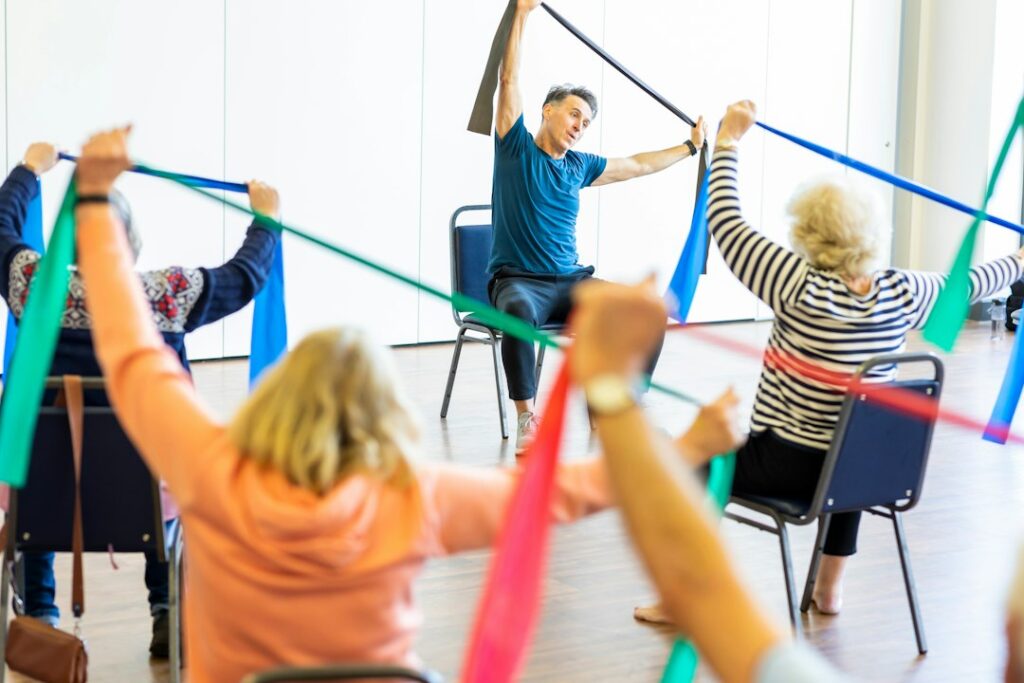
Strength exercises help residents perform everyday tasks such as rising from a chair, carrying light objects, opening containers, and maintaining posture. Programs may use:
- Resistance bands
- Light hand weights
- Seated leg lifts
- Wall-supported movements
- Repeated sit-to-stand practice
- Gentle pushing and pulling exercises
Balance activities are especially valuable because reduced balance can increase fall risk. Exercises may include shifting weight from side to side, standing behind a sturdy chair, heel-to-toe movements, or practicing safe turns.
Flexibility exercises can help maintain comfortable movement in the shoulders, hips, ankles, and spine. Gentle stretching may be included after walking or strength exercises, when muscles are warm.
Tai chi, chair yoga, dance-based movement, and simple recreational games can combine several of these elements. They may also make exercise feel less like a medical task and more like a social activity.
Can residents with limited mobility participate?
Yes. A resident does not need to walk independently to benefit from a fitness program. Many movements can be performed from a stable chair, including arm reaches, ankle pumps, seated marching, trunk rotations, and resistance-band exercises.
Residents who use wheelchairs may work on upper-body strength, posture, reaching, transfers, and flexibility. Those with walkers or canes may practice standing, controlled stepping, and turning with appropriate supervision.
A useful program offers different levels of difficulty rather than expecting everyone to complete the same routine. For example, one person may perform standing leg exercises while another completes the same movement while seated. Both residents can participate in the same group without competing.
How often should seniors exercise?
Consistency generally matters more than intensity. Short sessions several times a week may be more realistic and comfortable than occasional demanding workouts.
A weekly schedule might include:
- Walking or seated aerobic movement on several days
- Strength exercises on two nonconsecutive days
- Balance practice during supervised sessions
- Gentle stretching most days
- Informal movement, such as walking to activities or helping with light tasks
Some residents may tolerate only five or ten minutes at first. That can still be a useful beginning. Activity can gradually increase as endurance improves, provided the person does not develop unusual pain, dizziness, severe shortness of breath, or prolonged exhaustion.
Exercise should not be treated as a test of willpower. Rest periods, hydration, comfortable clothing, supportive footwear, and adjustments for medication timing can make participation safer and more sustainable.
What safety questions should residents and families ask?
Before joining a new exercise class, a resident should understand how the activity will be adjusted for personal health needs. Helpful questions include:

- Is the instructor familiar with older adults and mobility limitations?
- Can exercises be performed while seated?
- What support is available for transfers and walking?
- Are chairs, walls, or rails available for balance work?
- How are blood pressure, oxygen needs, pain, or fatigue considered?
- What happens if a resident becomes dizzy or unwell?
- Is the room free of clutter, loose rugs, and other tripping hazards?
- Are exercises paused during extreme heat, icy conditions, or poor outdoor walking conditions?
Residents with a recent fall, surgery, fracture, uncontrolled heart symptoms, significant breathing problems, or a major change in mobility may need individualized medical guidance before increasing activity. Pain that is sharp, worsening, or associated with swelling should not be ignored.
A safe class should emphasize controlled movements rather than speed. Participants should never be pressured to stand without appropriate support or to continue through concerning symptoms.
Does exercise help with falls and independence?
Exercise can support the physical abilities connected with safer daily movement, including leg strength, balance, coordination, and confidence. It cannot eliminate fall risk, but regular practice may help residents manage common challenges such as standing from a low chair, stepping around furniture, or changing direction.
Strength and balance exercises are especially relevant for maintaining independence. A resident who can safely rise from a chair, walk to the dining area, or reposition in bed may need less assistance with routine activities.
Fitness is only one part of fall prevention. Good lighting, properly fitted footwear, clear walking paths, medication review, vision care, and appropriate use of mobility devices also matter.
How does the local setting affect senior fitness in Ambler?
Seasonal conditions can influence how residents stay active. During cold weather, snow, ice, or heavy rain, indoor walking routes and seated classes may be safer than outdoor activity. Summer heat and humidity may also make morning or indoor exercise more suitable.
In a community with a mix of apartment-style housing, established neighborhoods, and walkable areas, families may think of fitness as simply taking a daily walk. That can be helpful, but walking alone does not address every need. A balanced program should also include strength, balance, and flexibility.
Indoor programs can be particularly useful during months when outdoor sidewalks are uncomfortable or unsafe. They also provide a predictable social routine, which may encourage residents to participate more consistently.
What makes a program enjoyable enough to continue?
The strongest program is usually one residents are willing to attend repeatedly. Familiar music, seasonal themes, small-group conversation, and activities connected to daily life can improve participation. Some residents prefer structured classes, while others enjoy walking with a companion, gardening-related movement, or games that involve reaching and coordination.
Goals should be practical and personal. One resident may want to improve standing endurance, another may want to walk farther, and another may simply want to move comfortably during morning care. Progress can be measured through participation, confidence, steadier movement, or greater ease with daily tasks—not only through distance or repetitions.
Fitness in assisted living works best when it is flexible, safe, and connected to independence. The purpose is not to create athletes. It is to help residents preserve useful movement, maintain social connection, and participate in daily life as fully as possible.