
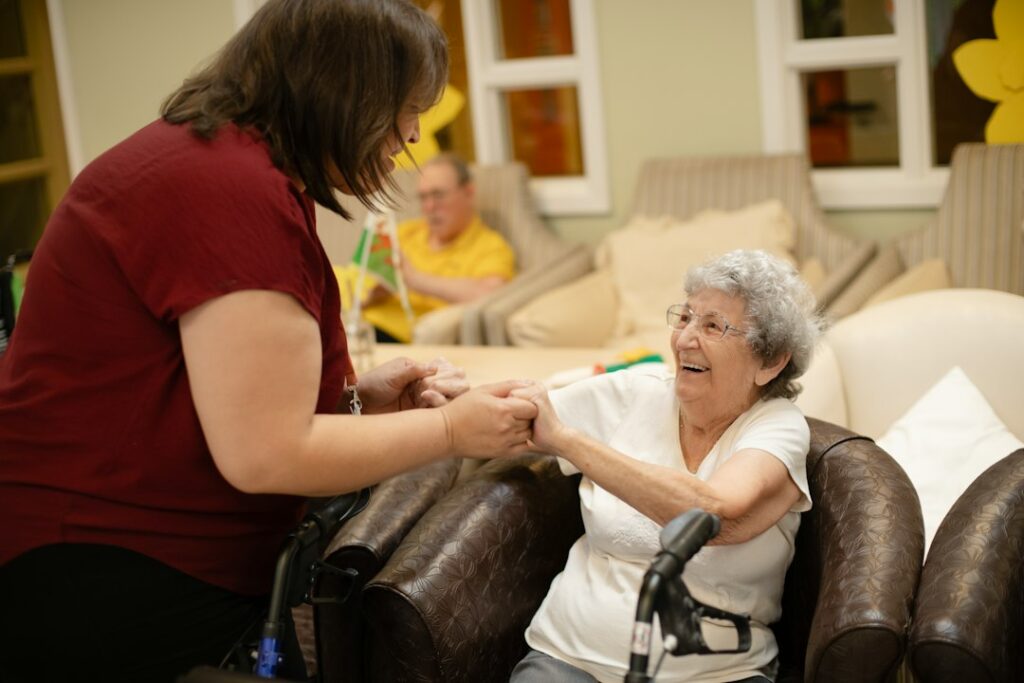
Assisted living events are more than scheduled activities. They can help family members understand a resident’s daily experience, build trust with staff, and support meaningful relationships without taking over the resident’s routine. The most helpful approach is to participate with curiosity, respect, and attention to the resident’s preferences.
Why should family members attend assisted living events?
Family attendance can help residents feel connected, but the value goes beyond companionship. Events provide a practical window into how a person is adjusting, what activities they enjoy, and where they may need additional support.
A family member may notice that a resident:
- Becomes more engaged during music, crafts, discussion groups, or exercise
- Avoids crowded gatherings but enjoys smaller conversations
- Has difficulty hearing instructions or following the pace of an activity
- Seems tired, uncomfortable, withdrawn, or unusually anxious
- Forms new friendships or shows interest in a previously unfamiliar activity
These observations are not a substitute for medical assessment, but they can help families communicate more clearly with appropriate staff. Attending regularly can also make visits feel less pressured because conversation happens naturally around a shared activity.
What kinds of events are usually available?
Assisted living calendars often include a mixture of social, educational, physical, creative, and seasonal activities. The schedule may change based on residents’ interests, staffing, weather, and health considerations.
Common examples include:
- Group meals, coffee hours, and informal social gatherings
- Music performances, sing-alongs, or listening sessions
- Art, gardening, writing, or craft activities
- Gentle movement, stretching, walking, or balance programs
- Games, trivia, discussion groups, and current-events conversations
- Religious or spiritual gatherings for residents who request them
- Birthday celebrations, seasonal programs, and family gatherings
- Educational talks about health, safety, nutrition, or local history
Family members do not need to attend every event. A resident may prefer a relative to join a specific activity, such as a holiday meal or a favorite music program, rather than appear at every scheduled gathering.
How can a family member prepare before attending?
A short conversation beforehand can prevent confusion and reduce stress. Ask the resident what the event involves, whether visitors are welcome, and what kind of participation feels comfortable.
It may also help to clarify:
- The start and end time
- Whether the event is indoors or outdoors
- Whether seating is assigned or flexible
- How much walking or standing is expected
- Whether food, noise, bright lighting, or crowds may be difficult
- Whether photographs or recordings are allowed
- Whether the resident wants active help or simply company
In Ambler, seasonal weather can affect transportation and outdoor programming. Winter cold, summer heat, rain, and icy walkways may make an indoor visit more practical. Families should allow extra time during poor weather and avoid making a resident feel rushed.
If the resident has memory loss, hearing difficulty, mobility limitations, or sensory sensitivity, preparation becomes even more useful. Bringing needed glasses, hearing devices, appropriate clothing, or a mobility aid can make participation easier.
Should family members participate or simply observe?
The answer depends on the resident and the event. Some residents welcome an enthusiastic partner, while others feel embarrassed or crowded when a family member takes over.
A balanced approach is to ask before stepping in:
- “Would you like me to join you?”
- “Should I help with this activity, or would you rather do it yourself?”
- “Would you like to sit near the group or somewhere quieter?”
During the event, follow the resident’s lead. Avoid answering every question for the resident, correcting minor mistakes, or directing the person’s movements unless safety requires it. A resident who needs extra time may benefit from patience rather than quick assistance.
Participation can be simple. Sitting nearby, sharing a song, looking at artwork, helping hold materials, or discussing the activity afterward may be enough.
How should family members interact with other residents?
Courtesy and privacy matter in group settings. Family members should introduce themselves briefly, listen more than they speak, and avoid asking personal questions about health, finances, family conflict, or living arrangements.
It is generally appropriate to:
- Use the name a resident prefers
- Include nearby residents in polite conversation
- Respect someone who does not wish to talk
- Avoid discussing private family matters in public areas
- Follow directions about food, photography, and shared materials
- Let staff handle care needs that are outside a visitor’s role

A family member may develop friendly relationships with other residents, but the primary purpose of attendance remains supporting the relative. Personal information shared casually should not be repeated outside the setting.
What if the resident refuses to attend?
Refusal does not automatically mean a resident is being difficult or uninterested. The person may be tired, uncomfortable, worried about the group, confused about the event, or concerned about losing independence.
Try to understand the reason without arguing. A smaller activity, a quieter time, or a brief visit may work better than a large gathering. It may also help to offer choices instead of pressure: attend for ten minutes, sit near the exit, or leave if the event becomes uncomfortable.
Repeated refusal, sudden withdrawal, or a noticeable change in behavior deserves attention. Families can share observations with appropriate staff, especially if the change occurs along with appetite loss, sleep disruption, pain, confusion, or reduced mobility.
How can families use events to communicate with staff?
Events are not always the right setting for detailed care discussions. Staff may be focused on supervising residents, serving food, or managing the activity. For private or complex concerns, ask for a separate conversation through the usual communication process.
Useful observations are specific and neutral. For example:
- “She seemed to have trouble hearing the instructions.”
- “He enjoyed the music but became tired after standing.”
- “She has stopped attending activities she previously liked.”
- “He appeared uncomfortable when the room became crowded.”
Avoid drawing conclusions from one event. A single quiet afternoon may reflect fatigue or a temporary mood. Patterns over several visits are more useful.
Families can also ask how residents are encouraged to choose activities, how accommodations are handled, and how changes in participation are documented or communicated.
What boundaries should family members keep in mind?
Family involvement should support the resident’s dignity and autonomy. Visiting relatives are not expected to supervise the entire event, provide personal care for others, or resolve every concern immediately.
Boundaries may include:
- Respecting the resident’s right to decline participation
- Avoiding criticism of staff in front of residents
- Not bringing unapproved food, medication, or equipment
- Following infection-control or illness-related rules
- Keeping visits manageable for the resident
- Leaving if the resident becomes overwhelmed or wants private time
If a safety concern is urgent, report it promptly through the appropriate staff channel. If the concern involves possible abuse, neglect, or immediate danger, it should be treated as a serious matter rather than handled informally during an activity.
How often should a family member attend?
There is no universal schedule. Consistency usually matters more than frequency. A predictable visit once a week or twice a month may be easier for a resident than irregular appearances that create uncertainty.
Some families alternate responsibilities so one person attends a special event while another visits privately. Others combine an event with a meal or short walk. The right arrangement depends on the resident’s energy, preferences, transportation needs, and family availability.
The most useful visits are not necessarily the longest. A calm, attentive presence can help a resident feel included while giving the family a realistic understanding of daily life.
